
Dental Office Harassment: What a Michigan Co-Worker Ruling Means for Dentist Office Owners
An employee’s harassment of co-workers creates liability for the practice AND the owner. Owners can be personally named when they fail to prevent or stop it. A federal trial court in Michigan recently sent a co-worker harassment claim against an orthodontics practice to trial. That ruling is not a verdict. It does tell us what a court looks at in these cases. Specifically: what the owner did after the complaint, and whether the behavior actually stopped.
Key Takeaway
A meeting and a front desk camera did not end this dental practice’s harassment case. A federal judge said a jury could find the comments never stopped, so the case is headed to trial. Federal and New Jersey law do give employers a defense in some harassment claims, and it rewards the practices that can prove they prevented and corrected the problem. In our experience, the missing piece is often the paperwork nobody had time to build.
- Courts look at whether your response worked, not whether you responded.
- A supervisor harasser makes you liable unless you prove the defense. For a co-worker harasser, the employee must prove you knew and failed to act. Your policy and records are the proof either way.
- The proof is a signed policy, a way to report, a documented investigation, and follow-up. The step-by-step plan is below.
The time to find out what is missing is before the complaint arrives.

What the Court Decided:
On September 21, 2026, Judge Brandy McMillion of the U.S. District Court for the Eastern District of Michigan issued an opinion and order in Vandyke v. Drs. Bookwalter & Fee, P.C., No. 2:24-cv-12322. You can read the full opinion and order, and HR Dive covered the decision. The court was ruling on the practice’s motion for summary judgment. It was not ruling after a trial.
Three points matter before anything else. This is a Michigan federal trial-court ruling, so it is not New Jersey law. It is not a final outcome, because the surviving claims go on in the same court. And it is not a verdict. A jury has not decided anything.
| Claim | Result at summary judgment |
|---|---|
| Race discrimination (federal and Michigan law) | Granted for the practice |
| Retaliation and wrongful discharge | Granted for the practice |
| Harassment and hostile work environment | Denied. These claims proceed |
The former front desk employee testified that a co-worker made comments referencing slavery-era speech, almost daily in 2022 and at times into 2023. Those are her allegations, and the practice disputes how serious they were. The practice told the court it held a meeting with both employees after a November 2022 complaint and later installed a camera at the front desk. The court wrote that a reasonable jury could find the practice’s response did not stop the conduct, based on her testimony that the comments continued. It also found that the practice’s own belief that the conduct was not racially motivated created a factual dispute for trial. Whether the conduct was severe or pervasive enough is left to the jury.
What This Means for a Dentist and Owner
Nobody can say how this case ends, and we are not predicting it. The useful lesson comes from the facts the court weighed. A response counts when it works. One meeting and a conclusion that nobody meant harm did not settle the question for this judge, because the employee said the comments kept happening.
Dental practices are small teams. Front desk, assistants, hygienists, and the doctor work within a few feet of each other all day, so a peer problem is rarely hidden for long. It is also rarely a one-time event. That is why the owner’s follow-through matters as much as the first meeting.
Does New Jersey Law Reach Co-Worker Harassment?
The New Jersey Division on Civil Rights says in its Law Against Discrimination fact sheet that the law applies in employment and prohibits bias-based harassment. It states that when harassment creates a hostile environment, an employer must take reasonable steps to stop it if the employer knew or should have known about it. The fact sheet says this includes harassment between coworkers, not only harassment by a supervisor.
Federal guidance points the same direction. The EEOC harassment page says an employer is liable for harassment by non-supervisory employees if it knew or should have known and failed to take prompt and appropriate corrective action. For coverage questions, ask an employment attorney about your practice.
The Employer Defense: What It Is and What It Takes
Two U.S. Supreme Court decisions from 1998, Burlington Industries v. Ellerth and Faragher v. City of Boca Raton, gave employers a defense against some harassment claims. In 2015 the New Jersey Supreme Court adopted the same test under the Law Against Discrimination in Aguas v. State of New Jersey.
The test has two parts. The employer must show it exercised reasonable care to prevent and promptly correct harassment. It must also show the employee unreasonably failed to use the preventive or corrective opportunities the employer provided. The employer carries the burden of proving both.
The limits matter. The defense applies to harassment by a supervisor, and it is not available when a supervisor’s harassment ends in a tangible employment action, such as a firing. In Aguas, the court treated an employee as a supervisor if the person could take or recommend tangible employment actions, or direct the complainant’s day-to-day activities. In a dental office, that may include an office manager or a lead assistant.
Hostile environment claims are judged one of two ways. If a supervisor is the harasser, the employer is automatically liable unless it proves the two-part defense. If a co-worker is the harasser, the employee must prove the employer knew or should have known and failed to act. Either way, your policy and your records are the proof.
Either way, the same evidence helps you. The Aguas court called an effective anti-harassment policy, and how it is implemented and enforced, a critical factor in negligence and recklessness claims. A policy on a shelf is not enough. Proof counts: dates, signatures, interview notes, and follow-up. The Michigan practice shows the gap. It held a meeting and installed a camera, and a federal judge still said a jury could find the comments continued.
Build This Before a Complaint Arrives
- A dated anti-harassment policy, signed by every employee.
- Two or more named people employees can report to, including one who is not the owner.
- Training records for the owner, managers, and staff.
- An investigation template that captures interviews, findings, and the corrective action taken.
- A follow-up log with check-ins at 30 and 60 days.
- A written retaliation reminder for every manager.
That is the strategy. It works only if someone owns it every week of the year.
How to Handle a Peer Complaint in a Dental Practice
This is experience-based HR guidance from more than 30 years of HR work and dental clients since 2013. It is not legal advice.
- Put a written anti-harassment policy in the handbook. Give examples of prohibited conduct, and collect a signed acknowledgment from every employee at hire and after any update. Your employee handbook is the natural home for it.
- Give employees a clear way to report. Name at least two people a team member can go to. If the only option is the dentist-owner, an employee with a complaint about the owner has nowhere to turn.
- Investigate promptly and document it. Interview the complainant, the person named, and any witnesses. Write down who said what and when. Decide the complaint on what was said, how often, and who heard it, rather than on whether the person meant harm.
- Take corrective action and check that it worked. Warnings, retraining, schedule changes, or termination may fit, depending on the facts. Aim the action at the person who engaged in the conduct, and avoid any step that looks like a penalty for the complainant, such as moving her shift or desk. Then follow up with the complainant at set intervals, such as 30 and 60 days, and record what you hear. This is the step the Michigan court examined most closely.
- Protect against retaliation. Do not change the complainant’s schedule, duties, or pay because of the complaint. Remind managers in writing that retaliation is prohibited and will be disciplined.
For the discipline step, see our page on employee terminations and discipline. For an overview of how an outside team supports a practice day to day, read HR for dental practices in New Jersey.
Where Dental Owners Go Wrong
The most common mistake is closing the file after one conversation. The second is treating a complaint as banter between two employees who need to get along. The third is verbal-only handling, where nothing is written down and the owner relies on memory a year later. A fourth happens in practices with a long-tenured office manager: the manager hears the complaint, handles it informally, and the owner learns of it only when a lawyer calls. Good job descriptions help here, because they make clear who is responsible for receiving complaints. Our guide to dental office job descriptions covers the office manager role.
Why This Takes an HR Department
The checklist is easy to read. It is hard to keep running. Someone has to write and update the policy, run the training, take complaints without taking sides, investigate within days, document every step, and check back weeks later. In a dental practice, the dentist is treating patients, the office manager is running the schedule, and the person with the complaint may be a friend of both. When the complaint involves the owner or the office manager, the practice needs someone outside the room.
That is what an HR department does. A practice that builds this before a complaint arrives can show its work afterward.
How My Virtual HR Director Supports Dental Practices
We have supported dental offices since 2013. Our outsourced HR department gives a practice a senior HR expert, an HR manager, and payroll or HR admin support, each with backup. Calls, texts, and emails are unlimited. We answer within 24 hours, and usually within a couple of hours. For sensitive matters such as a harassment complaint, we provide on-site support within a two-hour drive of Matawan, NJ. See HR compliance consulting for how we review policies and complaint procedures. If you are still comparing options, 12 questions to ask before you outsource HR is a good place to start.
Dental Office Harassment Questions
Is a Co-Worker’s Behavior My Responsibility as the Practice Owner?
Once you know about it, the response is yours. EEOC guidance says an employer can be liable for harassment by non-supervisory employees if it knew or should have known and failed to take prompt and appropriate corrective action. New Jersey’s Division on Civil Rights describes a similar duty for coworker harassment.
Does the Michigan Ruling Apply in New Jersey?
No. It is a federal trial-court decision from Michigan, issued on a motion for summary judgment. It does not decide the case and does not bind New Jersey courts. Owners can still learn from the facts the court weighed, especially what the practice did after the complaint.
What Should a Dental Harassment Policy Include?
Include examples of prohibited conduct, at least two people employees can report to, a promise of prompt investigation, a statement that retaliation is prohibited and will be disciplined, and a signed acknowledgment from every employee. Review it every year and cover it during new hire orientation.
How Fast Should I Respond to a Complaint?
Start within a day or two and tell the employee what to expect. Interview the people involved, write down what each says, and date every step. Speed matters because the behavior may continue while you wait, and a slow response is hard to defend later.
What If the Complaint Is About the Dentist-Owner?
An owner cannot fairly investigate a complaint about himself or herself. Bring in an outside HR professional to take the complaint and run the review, and keep the owner out of decisions about the complainant until it is finished. Document the process the same way you would for any other complaint.
My Virtual HR Director provides human resources support and experience-based HR guidance, NEVER legal advice. We do not provide legal, tax, or financial advice. Benefit plan design and strategy consulting is provided by our licensed senior HR leadership. Insurance quoting, marketing, and placement are provided separately by licensed partner agencies. For legal questions, consult a licensed employment attorney.
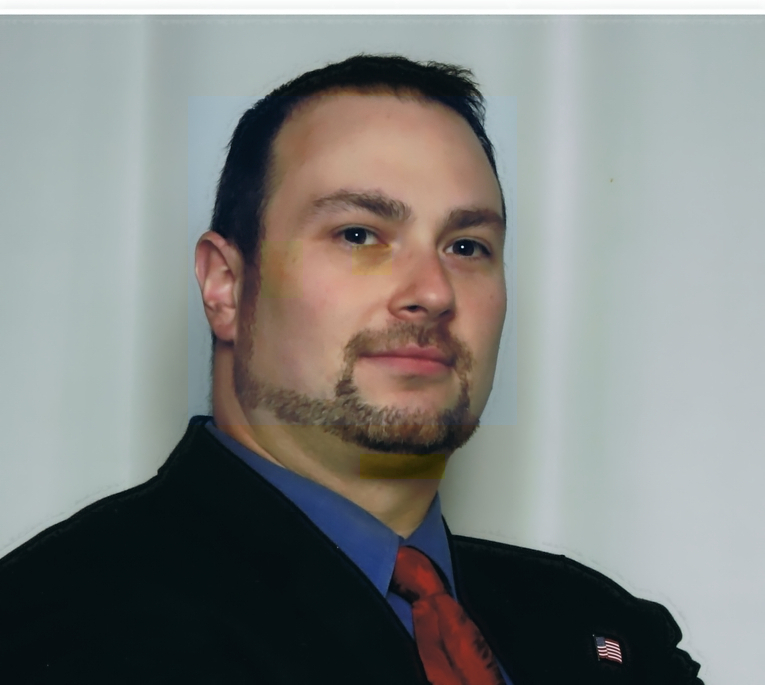
Joseph Campagna, SPHR, SHRM-SCP is president and owner of My Virtual HR Director, a human resources outsourcing company serving small and medium sized businesses nationwide. My Virtual HR Director provides an executive level HR advisor to companies that can’t afford or can’t justify hiring a fulltime HR professional on staff.
With thirty years of experience dedicated to the HR profession, Mr. Campagna has honed his skills as an expert in compliance, talent management and employee relations. Bringing human capital management experience from start-ups, IT and biotechnology companies, employee leasing, and fortune 100 behemoths Mr. Campagna has filled his tool belt through generalist work, executive positions, and consulting opportunities with companies such as ADP, Merrill Lynch, and Johnson & Johnson. As Vice President of HR for biotech company Hemo Concepts, as well as the head of HR for the global IT solutions company, the Galaxy Group, Mr. Campagna created rich and successful organizational development and employee engagement programs.
Having worked with a diverse group of companies and clients in a broad spectrum of industries and environments, he brings a unique HR philosophy to every organization he works with. “HR is not the picnic department,” he says “but instead bears the full responsibility and the unlimited potential for a highly productive and efficient workforce. If HR systems are successful, the organization’s revenue should be increased.” From mergers and acquisitions, to IPO’s, to new product development, to divestiture Mr. Campagna has a true business background to support his HR Architecture.
Mr. Campagna is certified as a senior professional through both the Human Resources Certification Institute (HRCI) and the Society for Human Resource Management (SHRM). The HRCI designation of Senior Professional in Human Resources (SPHR) is an experienced-based examination certification. The SHRM certification is a competency based examination certification. Each is a premier designation in the world of HR and recognized by the Society for Human Resource Management of which Joe is a national member and former chapter president.
Mr. Campagna brings decades of helping small and medium sized businesses create HR structures such as employee handbooks, performance systems, talent management, training programs, and employee engagement. He knows how to deliver business results through HR aligned objectives.
Nearly 30 years of expertise and HR executive authority combined with a group health insurance license and certifications from the Society for Human Resource management and the Human Resources Certification Institute have given Joseph Campagna the guru status that has earned him leadership roles, board of director roles, and speaking engagements related to human resources.